

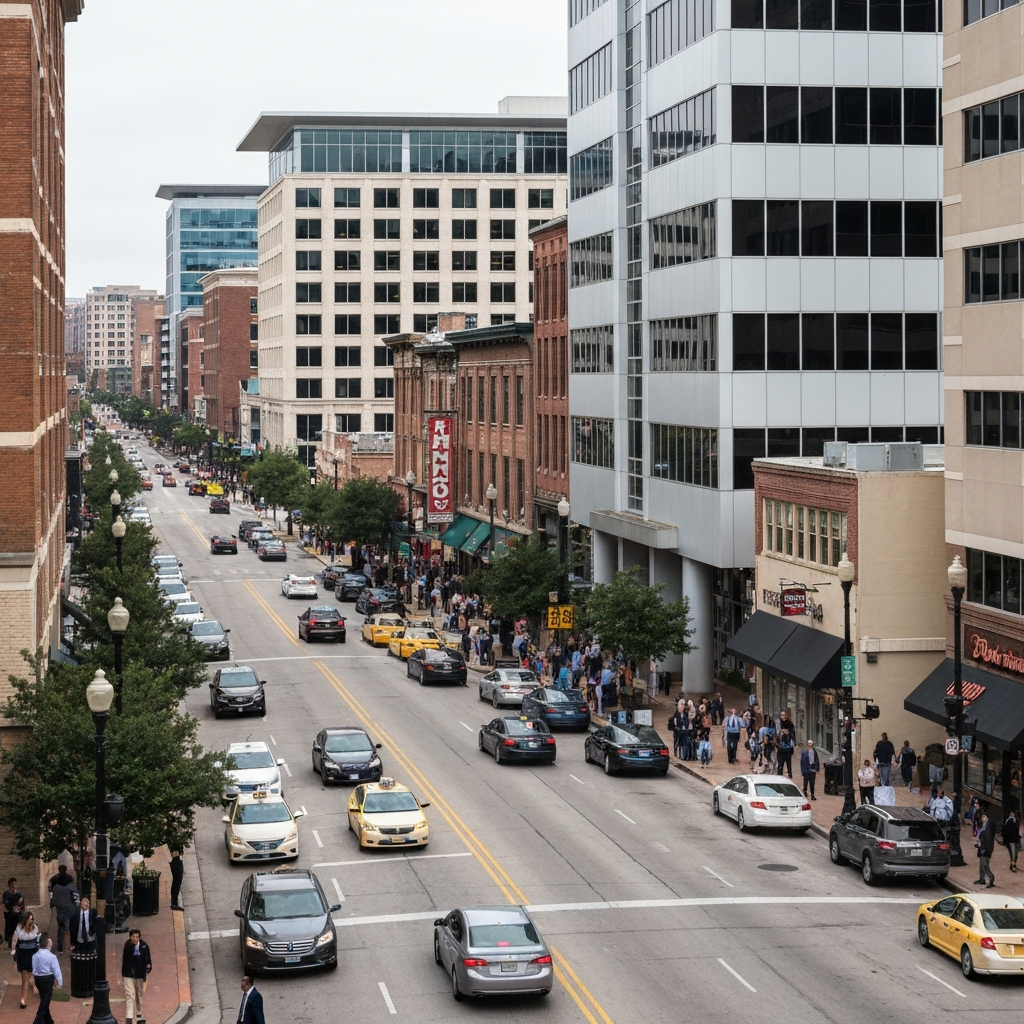
Plano, Texas, has transformed from a modest farming community into a vibrant economic hub within the Dallas-Fort Worth metroplex. This evolution is marked by the city’s ability to attract major corporations, support local businesses, and adapt to changing economic trends.
Corporate Relocations and Expansions
One of the most significant developments in Plano’s economic landscape is AT&T’s decision to relocate its global headquarters from downtown Dallas to a 54-acre campus on Legacy Drive in Plano. This move consolidates all of AT&T’s North Texas offices into one location, bringing over 10,000 employees to the city. Plano Mayor John Muns highlighted that the new headquarters will bring “fresh momentum” and more innovation to Plano’s Legacy district.
In addition to AT&T, other companies are expanding their presence in Plano. Tech Mahindra, for instance, has established its American headquarters in the city, creating a workspace designed to entice employees back to the office with amenities and proximity to various restaurants.
Local Business Growth and Innovation
Plano’s economic vitality isn’t solely driven by large corporations; local businesses are also thriving. Turan Uyghur Kitchen, which opened in 2023, introduced the unique flavors of Xinjiang cuisine to North Texas. As the first Uyghur restaurant in the Dallas area, it showcases the city’s growing cultural diversity and entrepreneurial spirit.
Moreover, the city is witnessing innovative repurposing of commercial spaces. WareSpace is converting the former Fry’s Electronics store into small industrial suites ranging from 200 to 2,500 square feet. This transformation aims to create a small business hub, accommodating up to 150 local businesses or tradespeople.
Economic Challenges and Opportunities
Despite its growth, Plano faces challenges such as rising rents in downtown areas, which have led to changes in the local business landscape. Additionally, the city’s limited undeveloped land—only 4% remains—poses constraints on further expansion.
However, these challenges also present opportunities. The upcoming launch of the Texas Stock Exchange, nicknamed “Y’all Street,” positions Plano as a potential financial-services hub. The city’s high concentration of finance jobs and corporate backing from firms like JPMorgan Chase could attract more investment and provide local businesses with better access to capital.
Conclusion
Plano’s economic landscape is a testament to its adaptability and forward-thinking approach. By balancing corporate growth with support for local businesses and addressing challenges proactively, the city continues to solidify its reputation as a dynamic and resilient economic center.