

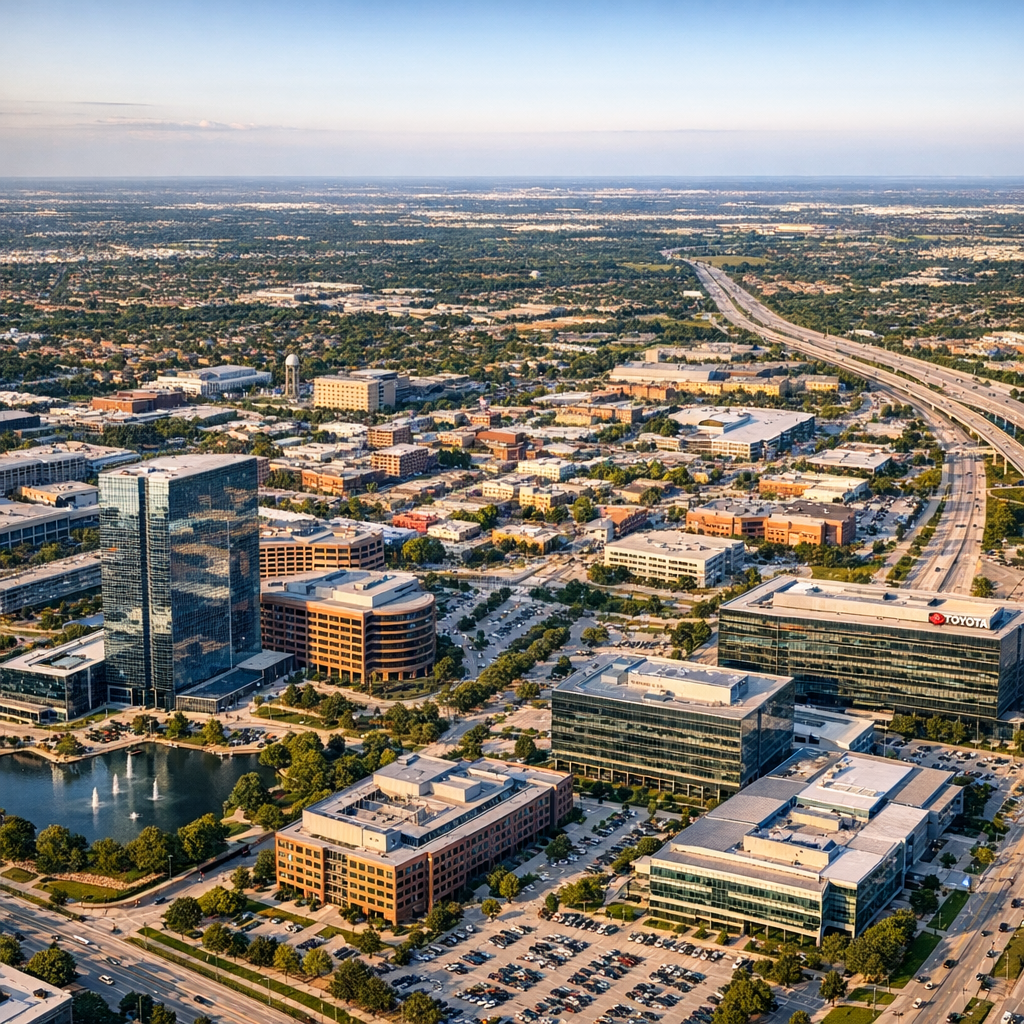
Plano, Texas, has long been recognized as a hub for corporate headquarters and a thriving local economy. Recent developments highlight both the growth and challenges facing the city’s business landscape.
Corporate Relocations and Expansions
In a significant move, AT&T announced plans to relocate its global headquarters from downtown Dallas to a 54-acre site in Plano. This consolidation aims to bring over 10,000 employees to the new campus on Legacy Drive, reflecting a broader trend of businesses favoring North Texas suburbs for their operations. The relocation is expected to boost Plano’s economic momentum and innovation.
Impact of Rising Rents on Local Businesses
Downtown Plano has experienced shifts in its business environment due to rising rents and changing consumer habits. Over the past year, several longstanding businesses have closed, while new service-oriented establishments have emerged. The average asking retail rent in the far north Dallas area increased by approximately 7%, from $21.64 to $23.12 per square foot. This trend poses challenges for small retail businesses striving to maintain a brick-and-mortar presence.
Innovative Developments in Commercial Spaces
Addressing the evolving needs of small businesses, WareSpace is transforming the former Fry’s Electronics store in Plano into a hub for small industrial suites. The 175,000-square-foot facility will offer spaces ranging from 200 to 2,500 square feet, providing a supportive environment for up to 150 small businesses or tradespeople. This adaptive reuse reflects a growing demand for flexible and affordable commercial spaces.
Demographic Trends and Economic Implications
Plano’s population growth has slowed, with an average annual increase of approximately 1% between 2010 and 2019. The city is also experiencing an aging population, with a median age of 38.7 years as of 2019. Additionally, over 25% of residents were born outside the United States, contributing to the city’s increasing diversity. These demographic shifts have implications for the local economy, influencing workforce dynamics and consumer preferences.
Conclusion
Plano’s business environment is undergoing significant transformations, marked by major corporate relocations, rising commercial rents, and innovative developments in commercial real estate. While these changes present challenges, they also offer opportunities for growth and adaptation. The city’s ability to navigate these shifts will be crucial in maintaining its economic vitality and appeal to both businesses and residents.